
ZEC mining explained
How blog-zcash-mining-2026.html">Zcash mining works from the miner's side: Equihash, hashrate in solutions per second, pools, difficulty, and how a block reward turns into ZEC in your wallet.
Mining Zcash means running the Equihash algorithm on dedicated hardware and submitting proofs of work to a pool. The pool combines thousands of miners, finds blocks, and pays each miner in proportion to the work submitted.
Solutions, not hashes
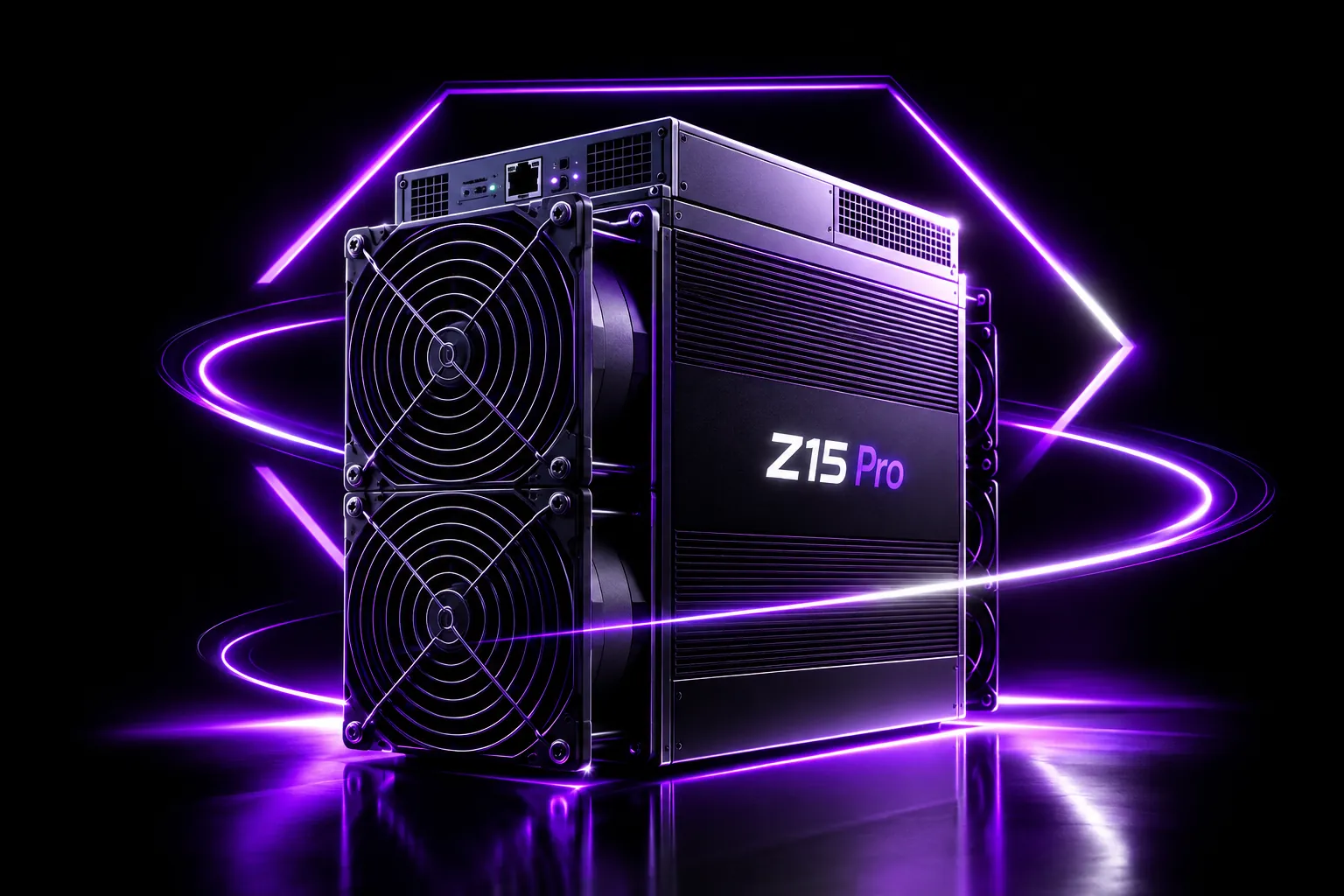
Equihash miners are measured in solutions per second (Sol/s). An Antminer Z15 Pro delivers 840 or 860 kSol/s; the whole Zcash network runs at several GSol/s. Your share of the daily reward is simply your hashrate divided by the network's.
Difficulty
The network adjusts difficulty every block so that blocks keep arriving every 75 seconds. When more miners join, difficulty rises and each machine earns less; when miners leave, the opposite. That is why our estimates always show the network hashrate they are based on.
Efficiency is the number that lasts
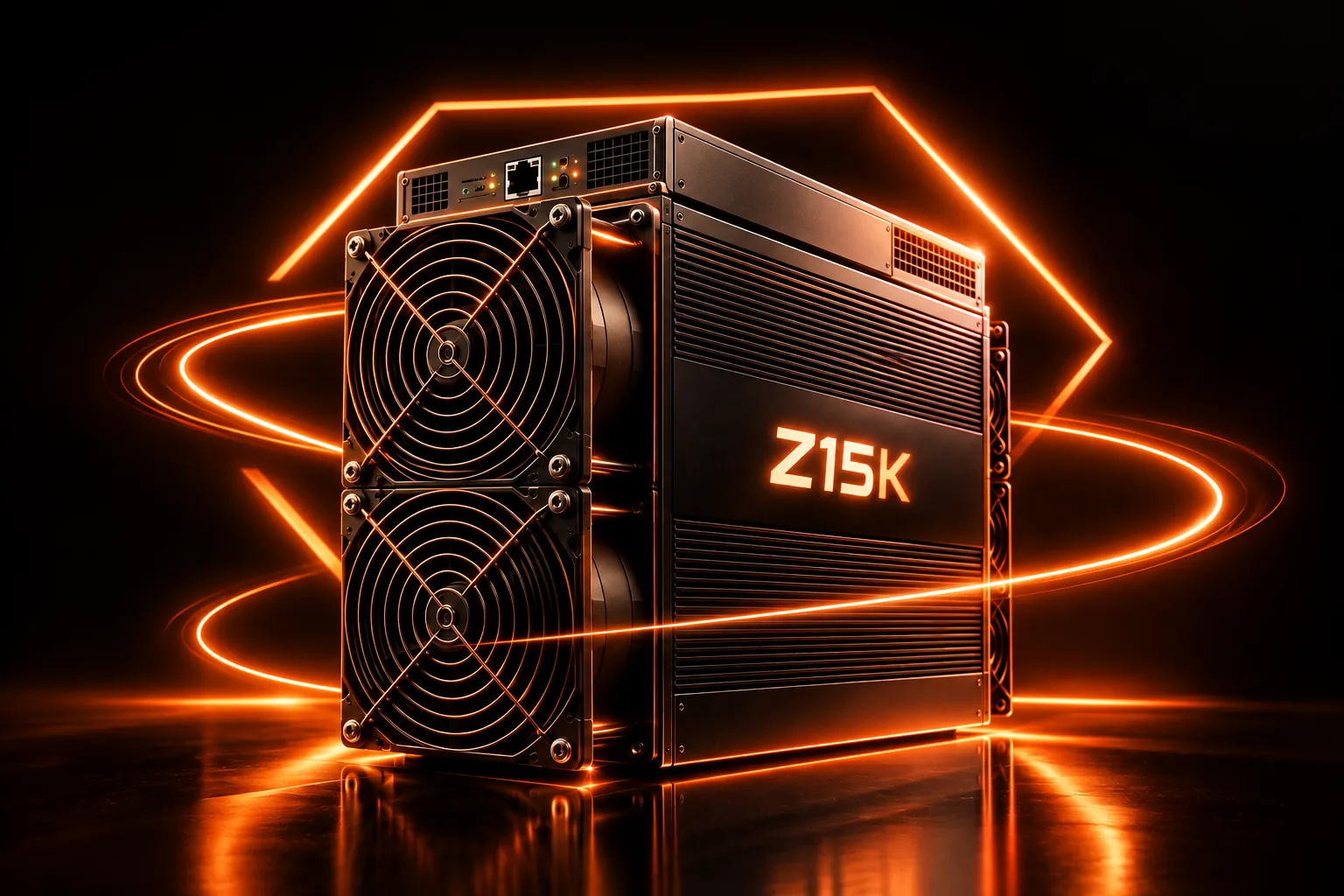
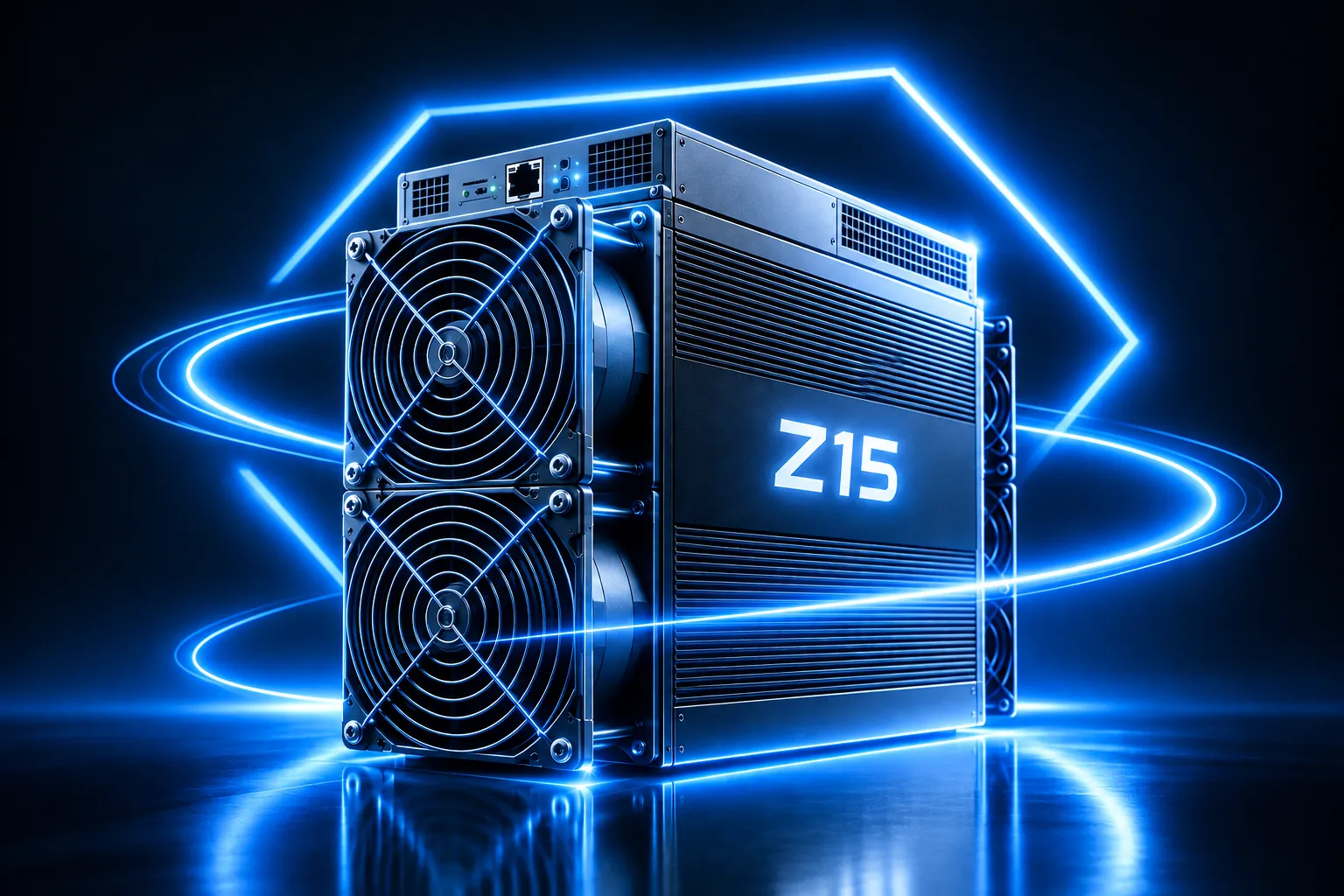
Revenue moves with the ZEC price. Cost is electricity, and electricity per solution is fixed by the machine: joules per kilo-solution (J/kSol). The Z15 Pro's ~3.3 J/kSol is why it stays profitable in conditions where older or less efficient hardware does not. Compare the Z15 models.
From block to wallet
- Your miner submits shares to the pool.
- The pool finds a block and receives the 1.25 ZEC miner reward.
- The pool pays out to every worker in proportion to shares, minus its fee.
- ZEC arrives at the address you configured, daily or when a minimum is reached.
Ready to see the numbers for your situation? Use the profit calculator.
Put it into numbers
Today's payback for every Z15, with live ZEC price and our hosting rates.
Sources & further reading
Independent references we use ourselves. They open in a new tab.
- Zcash Improvement ProposalsThe protocol specification, including Equihash parameters.
- Blockchair: Zcash explorerNetwork hashrate, difficulty and block data.
- MiningPoolStats: ZcashLive comparison of ZEC pools by hashrate and fee.
- BitmainManufacturer of the Antminer Z15 range; official specifications.