
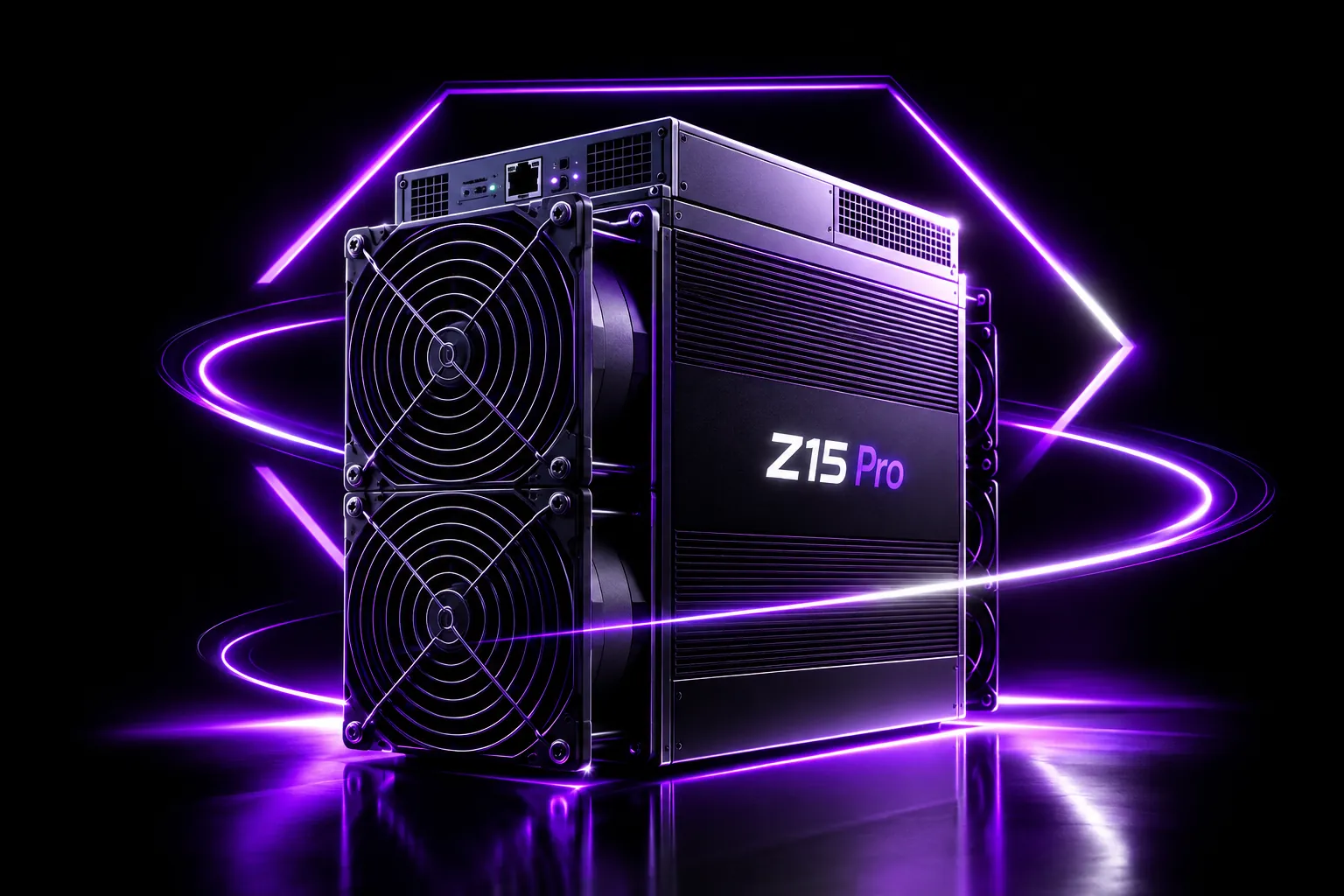
ZEC immersion hosting: why tanks beat fans for the long run
What immersion cooling does to an Antminer Z15 Pro: silence, stable chip temperatures, no dust, longer hardware life, and what the setup fee actually pays for.
In an immersion tank the miner sits fully submerged in a dielectric fluid that does not conduct electricity. Heat moves from the chips into the fluid and out through a heat exchanger. No fans, no airflow, no dust.
What it does for a Z15 Pro
- Silence. The 75 dB fans are removed. The hall is quiet enough to talk in.
- Stable temperatures. Fluid holds chips at a steady, lower temperature than air. Thermal cycling, the main ageing mechanism for hashboards, drops sharply.
- No dust or corrosion. The fluid seals the electronics from the environment.
- Longer life and resale value. Immersion-run boards typically outlast air-cooled ones and fetch more on the second-hand market.
- Headroom. With thermals under control, a modest overclock is possible on request.
What the setup fee covers
Fans are removed and stored, the unit is prepared for the tank, fluid is topped up, and the miner is provisioned in Foreman. In the UAE that is €800 per miner, one-off.
When rack hosting is the better choice
One or two units, a short horizon, or the tightest possible setup cost: air-cooled racks in Norway at €230 per miner. Electricity per kWh is the same tiered rate in both locations, so the decision is about setup cost versus hardware longevity. Side-by-side comparison.
Put it into numbers
Today's payback for every Z15, with live ZEC price and our hosting rates.
Sources & further reading
Independent references we use ourselves. They open in a new tab.
- Homb CloudThe hosting operator behind Z15 PRO.
- ForemanThe monitoring platform behind your hosting dashboard.
- BitmainManufacturer of the Antminer Z15 range; official specifications.